Lab-Grown Diamond Necklace Guide: How to Choose the Right Pendant and Chain
Some jewelry becomes part of your everyday routine. You reach for a necklace before leaving the house. A pendant that rests just below your collarbone, catching the light whenever you move. A piece that feels equally appropriate with a simple blouse or something reserved for a special evening.
A diamond necklace has that kind of versatility. It can be understated or expressive, depending on the details you choose.
For those exploring lab-grown diamond jewelry, finding the right necklace involves more than selecting a beautiful stone. The pendant design, gold color, chain length, and overall proportions all influence how the finished piece looks and feels.
The best combination is one that complements your personal style, sits comfortably, and suits the occasions you intend to wear it.
What Should You Look for in a Lab-Grown Diamond Necklace?
Choosing a lab-grown diamond necklace begins with understanding how its individual elements work together. The diamond may be the focal point, but its setting, metal, and chain determine the necklace's overall character.
Consider the Diamond's Shape and Size
Diamond shape influences the personality of a pendant.
Round brilliant diamonds offer a familiar, balanced appearance, while oval and pear shapes create a more elongated silhouette. Emerald-cut diamonds, with their clean lines and step-cut facets, appeal to those who prefer a quieter kind of brilliance.
Size matters, too. A smaller diamond can feel delicate and understated, while a larger stone creates a more noticeable focal point.
Rather than choosing based on carat weight alone, consider how the diamond's visible dimensions relate to the pendant and your preferred necklace length.
Understand the Diamond's Quality
Lab-grown diamonds have the same chemical, physical, and optical properties as mined diamonds. Their primary distinction is how they are formed.
When comparing stones, consider the four Cs:
- • Cut: Influences how effectively a diamond reflects and returns light.
- • Color: Describes the presence or absence of body color, commonly graded from D to Z for diamonds in the standard color range.
- • Clarity: Evaluates internal inclusions and external blemishes.
-
• Carat: Measures weight rather than physical dimensions.
For a pendant, cut quality deserves particular attention because it strongly influences sparkle. A well-cut diamond can appear lively without requiring the highest possible carat weight.
For significant purchases, an independent grading report can help you understand the diamond's characteristics.
Look Beyond the Diamond
The pendant setting determines how the stone is presented, while the metal color influences its overall appearance.
Yellow gold introduces warmth; white gold creates a cooler finish, and rose gold offers a softer, pink-toned effect.
The chain deserves equal consideration. Its length, thickness, and construction affect both how the pendant sits and how comfortably the necklace wears throughout the day.
A beautiful diamond is only one part of a beautifully considered necklace.
How Do You Choose the Right Pendant Style?
The best pendant style depends on whether you prefer understated elegance, added brilliance, contemporary design, or something with personal meaning. A solitaire is often the most versatile choice, but other designs can be equally timeless when they reflect the wearer's style.
Solitaire Pendants: Simple and Timeless
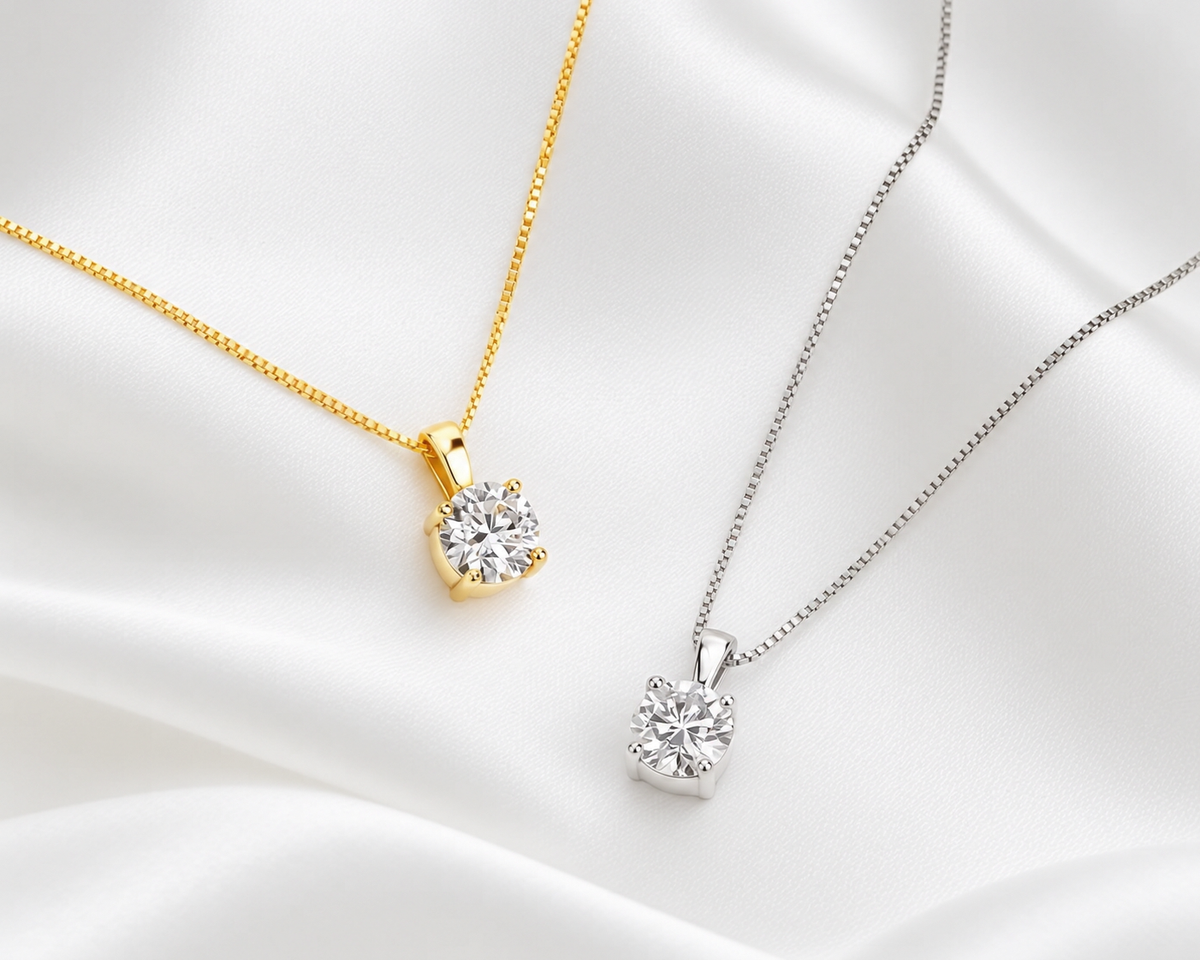
A solitaire pendant necklace features a single central gemstone, allowing its shape and brilliance to remain the focus.
Its simplicity makes it particularly versatile. A round solitaire can complement everyday clothing without feeling overly formal, while an oval or pear-shaped stone introduces a subtle variation.
Pristine Paradigm's Asteria Classic Necklace offers an example of this understated approach. Its classic solitaire-style design features a moissanite center stone rather than a diamond.
Although moissanite and lab-grown diamonds are different gemstones, both can be considered by buyers who appreciate a refined, single-stone pendant.
Halo and Accented Pendants: Added Brilliance
A halo setting surrounds the center stone with smaller gemstones, creating a more elaborate appearance.
This design can make the central arrangement appear larger and introduce additional sparkle.
Accented pendants offer a similar sense of detail without necessarily surrounding the entire stone. They may feature smaller diamonds along the setting or decorative elements that complement the center.
These styles suit someone who enjoys a little more brilliance while maintaining a balanced silhouette.
Geometric Pendants: A Contemporary Approach
Geometric designs use clean lines, structured settings, and distinctive shapes to create a modern appearance.
A bezel-set diamond, for example, is surrounded by a metal rim that creates a smooth outline and can provide additional protection around the stone's edge.
For those who prefer minimalist clothing or architectural jewelry, these details can feel especially considered.
Statement and Symbolic Pendants: Something Personal
Not every necklace needs to be understated.
Larger pendants, distinctive silhouettes, and meaningful motifs can express something personal about the wearer.
When choosing a lab-grown diamond pendant, consider whether you want the gemstone to draw attention or prefer a design where the setting carries equal visual importance.
The most memorable pieces often have a reason for being chosen beyond their appearance.
What Chain Length Is Best for a Diamond Pendant?
For most adults, a chain measuring 40–45 cm (16–18 inches) is a versatile starting point for a diamond pendant. It positions the necklace around the base of the neck or collarbone, although the exact placement depends on individual proportions.
Longer chains create a more relaxed silhouette and can be particularly useful for layering.
|
Chain length |
Typical placement |
Best suited for |
|
35–40 cm (14–16 in) |
Close to the neck |
Delicate pendants and higher necklines |
|
40–45 cm (16–18 in) |
Around the collarbone |
Everyday solitaire pendants |
|
50 cm (20 in) |
Below the collarbone |
Slightly larger pendants and layering |
|
55–60 cm (22–24 in) |
Upper chest |
Longer silhouettes and statement pieces |
Placements are approximate and vary with neck circumference, height, and body proportions.
Consider the Pendant's Size
A small solitaire often looks balanced on a shorter chain, where it remains visible near the collarbone.
Larger pendants may benefit from additional length, allowing the design to sit more naturally against clothing.
Think About Your Neckline
A 40–45 cm chain can work beautifully with open collars, scoop necklines, and V-neck tops.
For higher necklines, a longer chain may provide better separation between the pendant and the fabric.
If you frequently wear different necklines, an adjustable chain offers greater flexibility.
Pristine Paradigm's Asteria Classic Necklace, for example, uses a 40–45 cm adjustable chain, with longer lengths available. This range allows the pendant to sit at slightly different positions depending on the outfit.

Leave Room for Layering
If you enjoy wearing several necklaces together, consider spacing their lengths by approximately 5 cm or more.
This creates visual separation between pendants and reduces overlapping, although tangling can still occur depending on the chains.
The goal is a composition that feels intentional rather than crowded.
How Do You Match the Chain with the Pendant?
The chain should complement the pendant's design while providing enough strength to support its weight during regular wear.
A delicate pendant pairs well with a fine chain, while a heavier design may require something more substantial.
Balance Chain Thickness and Pendant Size
A very thin chain can make a large pendant appear visually unbalanced and may not provide adequate durability.
Conversely, a thick chain can overpower a small gemstone.
Consider the pendant's weight, the chain's construction, and the strength of its clasp and connecting rings.
Appearance alone is not enough to determine whether a chain is suitable.
Choose a Chain Style That Complements the Design
Cable chains feature rounded or oval links and offer a classic appearance.
Box chains have square-shaped links that create a smooth, structured look, while wheat chains have an interwoven pattern that provides texture.
For a delicate solitaire, a fine cable or box chain can allow the gemstone to remain at the focal point.
Consider Metal Color and Everyday Wear
Matching the chain and pendant in the same gold color creates a cohesive finish.
However, mixed metals can also work beautifully when the contrast is deliberate.
For everyday wear, pay attention to the clasp, chain construction, and how easily the necklace can be cleaned. Fine chains require careful handling, particularly when worn with heavier pendants.
A necklace should feel secure enough to enjoy, not so delicate that wearing it becomes a concern.
How Do You Choose a Necklace for Your Personal Style?
The right necklace brings together the gemstone, pendant, metal, and chain in a way that feels natural to the wearer.
For someone choosing a diamond necklace for women, personal style often provides a more useful starting point than trends.
For minimalist style, consider a small round solitaire on a fine chain. Its simplicity allows it to complement everyday outfits without demanding attention.
For classic style, choose timeless gemstone shapes, balanced proportions, and understated settings. A round or oval pendant in yellow or white gold can remain relevant across changing wardrobes.
For statement style, explore larger gemstones, distinctive silhouettes, or more detailed settings. The pendant can become the central element of an otherwise simple outfit.
For layered style, combine necklaces of different lengths, keeping their pendants and chain thicknesses visually balanced.
When comparing options for a diamond necklace in the Philippines, also consider how the piece fits your daily routine. A delicate necklace may be ideal for office wear, while a more elaborate design might be reserved for celebrations.
The best choice is not necessarily the most elaborate. It is the one you will genuinely enjoy wearing.
Explore Lab-Grown Diamond Jewelry with Pristine Paradigm
A thoughtfully chosen necklace has a way of becoming familiar. You notice how it rests against your skin, how it catches the light, and how naturally it becomes part of what you wear.
At Pristine Paradigm, an appreciation for considered design extends across lab-grown diamond jewelry and other lab-grown gemstone pieces. The brand's approach brings together craftsmanship, material transparency, and an understanding that fine jewelry should feel meaningful beyond the moment of purchase.
For those drawn to classic pendant designs, the Asteria Classic Necklace offer a beautiful reference point. Its solitaire-style setting features a moissanite center stone, a distinct lab-created gemstone known for its brilliance.
Whether you prefer the understated appearance of a solitaire, a more expressive pendant, or a necklace designed for layering, consider how each detail contributes to the finished piece.
Explore Pristine Paradigm's necklace and fine jewelry offerings online or visit its Makati showroom to appreciate different designs and proportions in person.
A necklace worth keeping is rarely defined by the diamond alone. It is the balance of thoughtful details, personal meaning, and a design that continues to feel right each time you put it on.
Explore Pristine Paradigm's fine jewelry collection and discover pieces chosen with intention, crafted with care, and made to become part of your story.